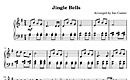
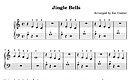
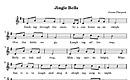
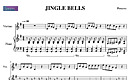
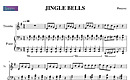
Jingle Bells
- Composer
- James Lord Pierpont
- Dull
- Carolau Nadolig
- Blwyddyn y cyfansoddwyd
- 1857
- Offerynnau
- Piano
Cerddoriaeth am ddim
-


- Beginner piano
- Offerynnau
- Piano
- Graddfa
-


- Easy piano
- Offerynnau
- Piano
- Graddfa
-

- Vocal line
- Offerynnau
- Llais
- Graddfa
Prynu argraffiadau printiedig
Rydym ni wedi dewis rhai argraffiadau print a fydd efallai o ddefnydd.
-
- Jingle Bells
- Pris
- $1.70
- Offerynnau
- Choral, Vocal
- Cyhoeddwr
- Hal Leonard
-
- Jingle Bells
- Pris
- $1.80
- Offerynnau
- Choral, Vocal
- Cyhoeddwr
- Hal Leonard
-
- Jingle Bells Rock! (A Medley)
- Pris
- $1.85
- Offerynnau
- Choral, Vocal
- Cyhoeddwr
- Alfred Publishing
-
- Jingle Bells Rock! (A Medley)
- Pris
- $1.85
- Offerynnau
- Choral, Vocal
- Cyhoeddwr
- Alfred Publishing
-
- Jingle Bells Rock! (A Medley)
- Pris
- $1.85
- Offerynnau
- Choral, Vocal
- Cyhoeddwr
- Alfred Publishing
-
- Jingle Bells
- Pris
- $2.50
- Offerynnau
- Piano
- Cyhoeddwr
- Hal Leonard
-
- Jingle Bells
- Pris
- $19.95
- Offerynnau
- Choral, Vocal
- Cyhoeddwr
- Hal Leonard
-
- Jingle Bells Rock!
- Pris
- $24.95
- Offerynnau
- Choral, Vocal
- Cyhoeddwr
- Alfred Publishing
-
- Jingle Bells Rock! (A Medley)
- Pris
- $30.00
- Offerynnau
- Choral, Vocal
- Cyhoeddwr
- Alfred Publishing
Gwybodaeth
"Jingle Bells" is one of the best known and commonly sung winter songs in the world. It was written by James Lord Pierpont (1822–1893) and copyrighted under the title "One Horse Open Sleigh" on September 16, 1857. Despite being inextricably connected to Christmas, it is not specifically a Christmas song.
Overview
When James Lord Pierpont's song was originally published in 1857, it had a different chorus melody, which was more classical, even Mozart-like. The 1857 lyrics differed slightly from those we know today. (The original words are given below in square brackets.) It is unknown who replaced the chorus melody and the words with those of the modern version. The song was reprinted in 1859 with the revised title of "Jingle Bells, or the One Horse Open Sleigh".
The first verse and chorus are the most often sung (and remembered) section of "Jingle Bells":
Music historian James Fuld notes that the "the word jingle in the title and opening phrase is apparently an imperative verb." However, it is commonly taken to mean a certain kind of bell.
Although less well known than the opening, the remaining verses depict high-speed youthful fun. In the second verse the narrator takes a ride with a girl and loses control of the sleigh:
In the next verse (which is often skipped), he falls out of the sleigh and a rival laughs at him: Note the incorrect form of the verb "lie". The event is being told using the past tense and should be "lay". (Cf. the list of commonly misused English words.)
In the last verse, after relating his experience, he gives equestrian advice to a friend, who then picks up some girls, finds a faster horse, and takes off at full speed:
The "Jingle Bells" tune is used in French and German songs, although the lyrics are unrelated to the English lyrics. Both celebrate winter fun. The French song, titled Vive le vent ("Long Live the Wind"), was written by Francis Blanche and contains references to Father Time, Baby New Year, and New Year's Day. There are several German versions of "Jingle Bells"; the popular Roy Black version Christkindl and Christmastime.
Charts
"Jingle Bells" was first recorded by the Edison Male Quartette in 1898 on an Edison cylinder as part of a Christmas medley entitled "Sleigh Ride Party". The associated dialogue on this recording contains an early use of the term, "roadhouse". In 1902, the Hayden Quartet recorded "Jingle Bells".
In 1943, Bing Crosby and the Andrews Sisters recorded "Jingle Bells" as Decca 23281 which reached No. 19 on the charts and sold over a million copies. In 1941, Glenn Miller and His Orchestra with Tex Beneke, Marion Hutton, Ernie Caceres and the Modernaires on vocals had a No. 5 hit with "Jingle Bells" on RCA Victor, as Bluebird 11353. In 1935, Benny Goodman and His Orchestra reached No. 18 on the charts with their recording of "Jingle Bells". In 1951, Les Paul had a No. 10 hit with a multi-tracked version on guitar. In 1955, Don Charles, from Copenhagen, Denmark, recorded a novelty version with dogs barking to the melody of "Jingle Bells" as RCA 6344, which sold a million copies.
Crosby sang an unusual pronunciation of "jingle". The word is typically rendered "jing-gull", with a hard "g" interposed. Crosby's version is "jing-ull", lacking the hard "g" sound.
"Jingle Bells" has been performed and recorded by Perry Como, Frank Sinatra, Louis Armstrong, Duke Ellington, Dave Brubeck, Count Basie, Ray Brown, Oscar Peterson, Ella Fitzgerald, Nat King Cole, Mike Horsfall, The Hoppers, Boney M, Longines Symphonette and Ann Hampton Callaway, among many others. In 2006, Kimberley Locke had a No. 1 hit on the Billboard Adult Contemporary chart with a recording of "Jingle Bells".
In space
"Jingle Bells" was the first song broadcast from space, in a Christmas-themed prank by Gemini 6 astronauts Tom Stafford and Wally Schirra, December 16, 1965. They sent Mission Control this report:
The astronauts then produced a smuggled harmonica and sleighbells and broadcast a rendition of "Jingle Bells" (Smithsonian Magazine, December 2005 pp25ff). The harmonica, shown to the press upon their return, was a Hohner "Little Lady", a tiny harmonica approximately one inch long, by 3/8 of an inch wide.
Notable Recordings
The song is played during the Christmas party scene in the film One Flew Over the Cuckoo's Nest (1975).
A recording by The CSSR State Philharmonic featured in the film The Seeker (2007).
A recording by Brian Setzer Orchestra featured in the short film The Madagascar Penguins in a Christmas Caper (2005). This version recommends the virtues of riding in both a one-horse open sleigh and a '57 Chevrolet.
Poofer the Elf and the Smith family sang this song in "The Best Christmas Ever" while riding on Poofer's snowflake sleigh back home from Santa's Workshop to the Smiths' house. The lyrics are slightly modified to suit the mode of transportation and the location they're in.
Parodies and homages
Like many simple, catchy, and popular melodies, "Jingle Bells" is often the subject of parody. In addition to outright parody, many Christmas-themed songs use a snippet of notes from "Jingle Bells", usually from the beginning of the chorus, to establish a holiday theme. Some of these include:
Possible birthplaces
Mae'r testun uchod ar gael o dan drwydded y Creative Commons Attribution-ShareAlike License ( creativecommons.org/licenses/by-sa/3.0/ ). Mae'n defnyddio deunydd o erthygl Wicipedia "Jingle Bells" ( en.wikipedia.org/wiki/Jingle_Bells ).
Overview
When James Lord Pierpont's song was originally published in 1857, it had a different chorus melody, which was more classical, even Mozart-like. The 1857 lyrics differed slightly from those we know today. (The original words are given below in square brackets.) It is unknown who replaced the chorus melody and the words with those of the modern version. The song was reprinted in 1859 with the revised title of "Jingle Bells, or the One Horse Open Sleigh".
The first verse and chorus are the most often sung (and remembered) section of "Jingle Bells":
Music historian James Fuld notes that the "the word jingle in the title and opening phrase is apparently an imperative verb." However, it is commonly taken to mean a certain kind of bell.
Although less well known than the opening, the remaining verses depict high-speed youthful fun. In the second verse the narrator takes a ride with a girl and loses control of the sleigh:
In the next verse (which is often skipped), he falls out of the sleigh and a rival laughs at him: Note the incorrect form of the verb "lie". The event is being told using the past tense and should be "lay". (Cf. the list of commonly misused English words.)
In the last verse, after relating his experience, he gives equestrian advice to a friend, who then picks up some girls, finds a faster horse, and takes off at full speed:
The "Jingle Bells" tune is used in French and German songs, although the lyrics are unrelated to the English lyrics. Both celebrate winter fun. The French song, titled Vive le vent ("Long Live the Wind"), was written by Francis Blanche and contains references to Father Time, Baby New Year, and New Year's Day. There are several German versions of "Jingle Bells"; the popular Roy Black version Christkindl and Christmastime.
Charts
"Jingle Bells" was first recorded by the Edison Male Quartette in 1898 on an Edison cylinder as part of a Christmas medley entitled "Sleigh Ride Party". The associated dialogue on this recording contains an early use of the term, "roadhouse". In 1902, the Hayden Quartet recorded "Jingle Bells".
In 1943, Bing Crosby and the Andrews Sisters recorded "Jingle Bells" as Decca 23281 which reached No. 19 on the charts and sold over a million copies. In 1941, Glenn Miller and His Orchestra with Tex Beneke, Marion Hutton, Ernie Caceres and the Modernaires on vocals had a No. 5 hit with "Jingle Bells" on RCA Victor, as Bluebird 11353. In 1935, Benny Goodman and His Orchestra reached No. 18 on the charts with their recording of "Jingle Bells". In 1951, Les Paul had a No. 10 hit with a multi-tracked version on guitar. In 1955, Don Charles, from Copenhagen, Denmark, recorded a novelty version with dogs barking to the melody of "Jingle Bells" as RCA 6344, which sold a million copies.
Crosby sang an unusual pronunciation of "jingle". The word is typically rendered "jing-gull", with a hard "g" interposed. Crosby's version is "jing-ull", lacking the hard "g" sound.
"Jingle Bells" has been performed and recorded by Perry Como, Frank Sinatra, Louis Armstrong, Duke Ellington, Dave Brubeck, Count Basie, Ray Brown, Oscar Peterson, Ella Fitzgerald, Nat King Cole, Mike Horsfall, The Hoppers, Boney M, Longines Symphonette and Ann Hampton Callaway, among many others. In 2006, Kimberley Locke had a No. 1 hit on the Billboard Adult Contemporary chart with a recording of "Jingle Bells".
In space
"Jingle Bells" was the first song broadcast from space, in a Christmas-themed prank by Gemini 6 astronauts Tom Stafford and Wally Schirra, December 16, 1965. They sent Mission Control this report:
The astronauts then produced a smuggled harmonica and sleighbells and broadcast a rendition of "Jingle Bells" (Smithsonian Magazine, December 2005 pp25ff). The harmonica, shown to the press upon their return, was a Hohner "Little Lady", a tiny harmonica approximately one inch long, by 3/8 of an inch wide.
Notable Recordings
- Rosemary Clooney
- Ella Fitzgerald on her 1960 Verve release "Ella Wishes You a Swinging Christmas"
- Yello for the film The Santa Clause
- Robert DeCormier Singers (original version)
- Basshunter
- Frank Sinatra
- Glenn Miller
- Barbra Streisand
- Barry Manilow with Expose
- Bing Crosby
- Celia Cruz a salsa version in Spanish: "Feliz Navidad (Jingle Bells)"
- "Singing Dogs", a 1955 recording, originally part of a three-song melody that reached the Cashbox best-seller charts. The rerelease (as "Jingle Bells" only) reached #1 on Billboard's "Best Bets For Christmas" survey in 1971.
- Diana Krall
Like many simple, catchy, and popular melodies, "Jingle Bells" is often the subject of parody. In addition to outright parody, many Christmas-themed songs use a snippet of notes from "Jingle Bells", usually from the beginning of the chorus, to establish a holiday theme. Some of these include:
- "Yingle Bells" (Yogi Yorgesson) is a version in which the singer, using a mock-Scandinavian accent and suffering chillblains, laments that "I should have vorn long undervear in dat vone-horse open sleigh."
- "Jingle Bell Rock" (Bobby Helms) — the best-known homage to "Jingle Bells", directly referencing the source song's lyrics. Originally recorded and released by Helms in a rockabilly style, "Jingle Bell Rock" has itself since become a Christmas standard.
- "Grandma Got Run Over by a Reindeer" (Elmo & Patsy), "Christmas Bells" (The Boulder Boys), "Santa Claus Is Watching You" (Ray Stevens), "Christmas in Hollis" (Run-DMC) — these and other Christmas novelty songs use variations of the "Jingle Bells" chorus as an opening; in addition, the chorus of "Grandma" uses slightly different chord patterns.
- A well-known children's playground song uses the "Jingle Bells" melody of the parody of Batman:
- The title of Diane DeGroat's Christmas book in which Gilbert parodies the first line of the chorus; Jingle Bells, Homework Smells.
- In the Scholastic children's novel Junie B., First Grader: Jingle Bells, Batman Smells! (P.S. so does May.), Junie B. Jones sings the playground version listed above with the lyrics:
- U.S. schoolchildren in the 1960s commonly sang a different version:
- Children in the U.S., during and shortly after World War II, sang another version of the text:
- a parody of the song is known in the Philippines. It involves household appliances, and cookware that are common in the said country:
- "White Christmas" (The Drifters) "The Christmas Song" (Nat King Cole), "Santa Claus Is Coming to Town" (Bruce Springsteen), "Grandma Got Run Over by a Reindeer" (Elmo & Patsy), "Christmas at Ground Zero" ("Weird Al" Yankovic), "Have Yourself A Merry Little Christmas" (John Denver and the Muppets), "River" (Joni Mitchell) — these songs all close with variations of the "Jingle Bells" chorus.
- "Rusty Chevrolet", a novelty song by Michigan musical comedy group Da Yoopers, uses the melody of "Jingle Bells". The song, originally in their 1987 album Culture Shock, can also be found in their 1994 compilation For Diehards Only. The group performs "Rusty Chevrolet" year-round in concert, despite it being a Christmas song. This version ranked #17 in the nationally syndicated Dusty Rhodes Christmas Top 60 Countdown.
- "Green Chri$tma$", a 1950s song produced by Stan Freberg, parodies excessive Christmastime advertising, and sings of dashing through the snow in a 50-foot "cou-pé ... selling all the way."
- The 1963 song "Holiday Hootenanny" by Paul & Paula follows the same melody as "Jingle Bells", done to the beat of surf music.
- Another parody has the verse: Dashing through the snow, on a pair of broken skis, crashing into trees, and a piece of moldy cheese (Ha Ha Ha), the snow is turning red, I think I'm nearly dead, and next I'm in the hospital with stitches in my head.
- In The Brian Setzer Orchestra's version, the first occurrence of "one-horse open sleigh" in the chorus is changed to "'57 Chevrolet".
- In the song "Christmas Medley" from the CD Pokémon Christmas Bash there's a pokémon-ish version of the original song with some pokémon like Rapidash, Horsea, Slowpoke, Slowbro, Bellsprout, Magnemite and Seaking in the lyrics.
- Toward the end of A Christmas Story a group of waiters in a Chinese restaurant sing the chorus of this song to the Parker Family, of course mispronouncing some words as "Jinger Bears" and "shreigh", in a confusion of Asian stereotypes, as it is actually the Japanese who tend to convert L's to R's, whereas the L is a common vocal sound in Chinese.
- Mike McCready of American rock band Pearl Jam recorded a version of "Jingle Bells" for the band's 2007 Christmas Single. This version just features the chorus melody, with McCready doing Chuck Berry-esque fills in between.
- Although recorded by hundreds of artists, "Jingle Bells" in Kimberley Locke's 2006 version was the first to ever top Billboard's Adult Contemporary chart.
- The main cast of the film Over the Hedge sing the song in a DVD extra, with Hami burping the alphabet and the first two verses.
- In The Madagascar Penguins in a Christmas Caper, the main characters and the animals from the zoo sing it with personalized lyrics.
- The ventriloquist Jeff Dunham's character, Achmed the Dead Terrorist, sings the song "Jingle Bombs" (also parodying the name of other Christmas songs), where he describes his death, using many trademarks of his personality and job for the lyrics (the last verse containing his catchline, "I kill you!").
- Barbra Streisand's "Jingle Bells?", on her 1967 album A Christmas Album, is a faster, sillier version of the original, arranged by Marty Paich. Streisand uses "upsot" effectively (and comedically) as a question.
- "Jingle Bells Metal",a Skid Row song, is a heavy-metal version of Jingle Bells.
- Austrian Death Machine has made a thrash-metal version of the song.
- The metal band Korn wrote a death metal version of "Jingle Bells" called Jingle Balls for their 1999 album Issues.
- A cover by Crazy Frog of "Jingle Bells", combined with a cover of "U Can't Touch This", was released in 2005 as "Jingle Bells/U Can't Touch This".
- In 2008, St Agnes Fountain (Chris Leslie of Fairport Convention, David Hughes, Julie Matthews & Chris While) recorded a version for their CD Soal Cake.
- In an episode of Sponge Bob SquarePants, Mermaid Man, Barnacle Boy, and SpongeBob sing a parody, similar to the Batman version:
- Swedish Eurodance artist Basshunter, recorded a version of Jingle Bells, entitled "Jingle Bells (Bass)" in 2008.
- Another parody, about the Mario Brothers is:
- Yet another school yard parody goes:
- A Halloween parody of the song, called "Pumpkin Bells", was made by Peanuts to celebrate Halloween and especially the Great Pumpkin.
Possible birthplaces
- A plaque commemorating the "birthplace" of "Jingle Bells" is placed on the side of a building in the center of Medford Square in Medford, Massachusetts.
- In Savannah, Georgia, there is a marker commemorating the composition of "Jingle Bells" in a church where Pierpont served as music director.
Mae'r testun uchod ar gael o dan drwydded y Creative Commons Attribution-ShareAlike License ( creativecommons.org/licenses/by-sa/3.0/ ). Mae'n defnyddio deunydd o erthygl Wicipedia "Jingle Bells" ( en.wikipedia.org/wiki/Jingle_Bells ).
Teitlau eraill
One Horse Open Sleigh, hr:Zvončići, ml:ജിങ്കിള് ബെല്സ്, ja:ジングルベル, no:Bjelleklang